


Buying Guides
The Real Cost of Owning Property in France: Taxes, Fees & Maintenance in 2026
The purchase price and notaire fees are only the beginning. A clear guide to what owning a home in France costs every year in 2026, from taxe foncière and the second-home taxe d'habitation to co-ownership charges, villa upkeep, rental taxes and cross-border planning.

Buyers usually know what a French property will cost to buy. Fewer know what it will cost to own. Annual local taxes, building charges, insurance, utilities, upkeep and, for many international owners, someone to look after the home while they are away, all add up, and the total depends heavily on whether the property is a main residence, a second home or a rental.
This guide sets out the recurring costs of owning property in France in 2026, explains how each is calculated and who pays it, and ends with an annual budgeting checklist. It is general information: tax rules change, and your own situation should be reviewed by qualified advisers.
Purchase costs versus ongoing costs
It helps to separate the two.
One-time purchase costs are paid at signing: transfer taxes, the notaire's regulated fee and disbursements, and any agency fee payable by the buyer. For an existing home, they commonly total around 7–8% of the price. Our guide to buying property in France as an American explains them in detail.
Ongoing costs recur every year for as long as you own the property. They are the subject of this guide.
Taxe foncière
Every owner of a property on January 1 pays the taxe foncière for that year, whatever its use and whether or not the owner lives in France.
How it is calculated
The tax is based on the property's valeur locative cadastrale, an administrative estimate of the annual rent it could produce. For built property, the taxable base is half of that value. The base is then multiplied by rates voted each year by the commune and the intercommunal authority.
Cadastral values are revalued nationally each year. The coefficient was 1.7% in 2025 and 0.8% in 2026. Local rates can change too, so the bill can rise even when the revaluation is small.
The same notice usually includes the taxe d'enlèvement des ordures ménagères, the household waste collection tax, calculated on the same base with its own rate.
Practical points
Notices arrive in late summer, and payment is generally due in mid-October.
At a sale, the year's taxe foncière is commonly shared between seller and buyer in proportion to the time each owns the property, as agreed in the deed.
Ask the seller for the latest notice before you make an offer. It is the most reliable indication of what you will pay.
Taxe d'habitation
The taxe d'habitation was abolished for main residences in 2023. It still applies to second homes and to furnished homes not used as a main residence.
The second-home surcharge
In communes where the tax on vacant housing applies, the municipal council can vote a surcharge on the second-home taxe d'habitation of between 5% and 60%. Paris applies 60%, and many coastal communes apply a surcharge too. The result is that two similar second homes in neighboring communes can carry very different bills.
For 2026, second-home taxe d'habitation notices are issued in November and payment is due by December 15.
The occupancy declaration
Owners must declare how each of their properties is occupied, as a main residence, a second home or vacant, and by whom, in the "Gérer mes biens immobiliers" section of their account on impots.gouv.fr. The declaration is due before July 1 when a property has not yet been declared or its situation has changed. A new buyer must make one.
Vacant homes
A home that is unfurnished and vacant may instead be subject to the tax on vacant housing, depending on the commune and the circumstances.
Co-ownership charges
An apartment in a copropriété comes with service charges for the building's operation: cleaning, common electricity, elevator maintenance, building insurance, the property manager's fees and, in some buildings, a caretaker, heating or a swimming pool.
The works fund
Most co-ownerships must also contribute to a works fund, the fonds de travaux. The annual contribution must be at least 5% of the building's operating budget, and where a multi-year works plan has been adopted, at least 2.5% of the planned works as well. Small buildings with fewer than ten lots can opt out by unanimous vote, and new buildings are exempt for their first years.
Voted works
Major works, such as facade restoration, roof replacement or a new elevator, are voted at general meetings and paid by co-owners according to their shares. Read the minutes of recent meetings, the multi-year works plan and the pré-état daté before you buy: they tell you what is planned and what you may owe.
Insurance
Apartments. Co-owners, whether they live in the property or not, must carry liability insurance. A comprehensive home policy also covers contents and damage such as water leaks.
Houses and villas. A homeowner's policy covering the building, contents and liability is essential, and lenders require one.
Second homes. Check how the policy treats long periods of absence, theft and water damage, and whether it requires an alarm or particular locks.
Utilities
Electricity, water, gas where applicable, internet and, for some homes, heating oil carry standing charges even when the property is empty. A home's energy rating, the DPE, is a useful guide to heating and cooling costs. On the Riviera, air conditioning in summer and heating in winter both count.
Maintenance
Older buildings, Mediterranean sun and sea air all take their toll. Budget for regular upkeep: painting shutters and woodwork, servicing boilers and air conditioning, maintaining roofs and gutters, and repairing what wears out.
Villas, gardens and pools
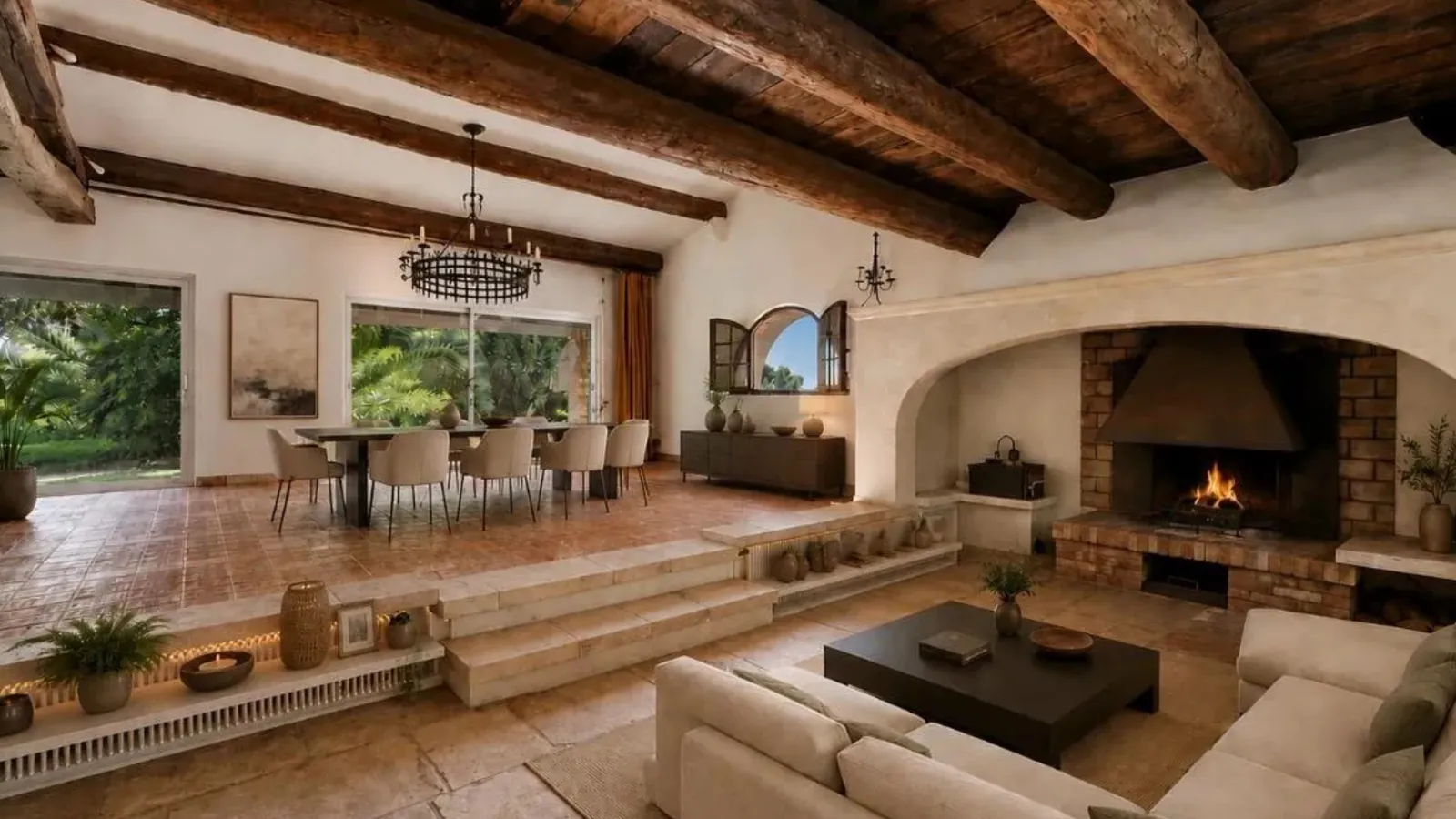
A villa adds costs an apartment owner rarely sees:
Garden maintenance, including irrigation, pruning and hedge cutting
Pool upkeep, including cleaning, chemicals, equipment and winterizing. A private in-ground pool must be equipped with an approved safety device, such as a barrier, alarm, cover or shelter.
Wildfire clearing. In wooded or brush-covered areas of the Alpes-Maritimes and other fire-prone départements, owners must clear vegetation within 50 meters of buildings, or 100 meters where a local fire-risk plan requires it, even when the area extends onto neighboring land. Failing to do so can lead to fines and to work carried out at the owner's expense.
Security, such as alarms, gates and monitoring
Property management
Owners who do not live in France full time often pay for a caretaker or property manager to check the home regularly, arrange repairs, receive deliveries, open and prepare the house before arrivals, and handle emergencies. Fees vary widely with the property and the service, from a periodic visit to full management.
Renovation reserves
Even a well-maintained property needs larger works over time: a new roof, windows, kitchen, bathrooms, electrical rewiring or energy improvements. Setting aside a reserve each year avoids an unpleasant surprise. For an apartment, the co-ownership's works plan shows what is coming for the building; your own interior is your responsibility.
Rental-related costs
If you rent the property, new costs and obligations appear.
Taxes on rental income. Rental income from French property is taxable in France, including for non-residents. Non-residents are generally subject to a minimum income tax rate of 20%, or 30% on the portion of net French-source income above a threshold, unless they show that their worldwide average rate is lower. Social charges also apply to property income, at 17.2% in most cases, or 7.5% for owners covered by a social security system of the EU, the EEA, Switzerland or the UK.
Short-term rentals. Furnished tourist rentals must be registered under the national system introduced by the law of November 19, 2024, and many cities require further authorizations. Nice, for example, adopted new change-of-use rules for furnished tourist rentals that apply from September 1, 2026, with annual quotas in several zones.
Energy rating. Homes rated G have been treated as non-decent for new rental leases since 2025, with F-rated homes following in 2028 and E-rated homes in 2034.
Management and turnover. Agency fees, cleaning, linen, and repairs between tenants.
Non-resident ownership
Non-residents own French property on the same basis as residents and pay the same local taxes. A few points apply particularly to them.
Wealth tax on real estate. The impôt sur la fortune immobilière (IFI) applies when net taxable real estate assets exceed €1.3 million on January 1. Non-residents are taxed on their French real estate.
Capital gains. A non-resident selling French property is generally taxed at 19% plus social charges on the gain, with reductions for the length of ownership. Rules differ for a main residence and for certain non-residents. Our guide to selling property in France as a non-resident explains the tax and the steps.
Inheritance. French inheritance rules and taxes differ substantially from American ones. How you hold the property matters.
Tax representation and filings. Depending on the situation, a sale or rental may require specific filings or a tax representative.
Currency considerations
If your income is in dollars and your costs are in euros, exchange rates change what your property costs you each year. Some owners keep a euro account funded in advance for local taxes, charges and maintenance, and convert periodically rather than for every bill. Compare transfer costs between providers.
Cross-border tax planning
For American owners, ownership in France interacts with U.S. obligations. The United States taxes citizens on worldwide income, so French rental income is generally reportable on a U.S. return as well, with credits and treaty provisions designed to limit double taxation. French bank accounts may need to be reported to the IRS. The structure of ownership, whether personal, joint or through a company, affects taxes in both countries and on inheritance. Take advice from a cross-border tax adviser before you buy, not after.
A hypothetical annual budget
The point of the exercise is not the totals but the structure. For an apartment, local taxes and co-ownership charges dominate. For a villa, upkeep and management often outweigh the taxes.
Primary home, second home or rental?
| Main residence in France | Second home | Rental property | |
|---|---|---|---|
| Taxe foncière | Yes | Yes | Yes, paid by the owner |
| Taxe d'habitation | No | Yes, with any local surcharge | Not when let as the tenant's main residence; a furnished home kept for seasonal lets can remain subject to it |
| Co-ownership charges | Yes | Yes | Yes, partly recoverable from tenants |
| Income tax on the property | No | No, unless rented | Yes, in France, and generally in the U.S. for Americans |
| Management | Optional | Often needed | Usually needed |
Annual budgeting checklist
Obtain the latest taxe foncière notice and, for a second home, the taxe d'habitation notice
Check whether the commune applies a second-home surcharge
Read the co-ownership budget, the works fund contribution and the works plan
Get insurance quotes for the way you will use the property
Estimate utilities from the DPE and past bills
Price garden, pool and wildfire-clearing obligations for a villa
Decide whether you need a caretaker or property manager
Set an annual renovation reserve
If renting, check local rules, registration and the taxes on rental income
File the occupancy declaration on impots.gouv.fr when required
Plan currency transfers and keep a euro reserve
Review cross-border tax and inheritance planning with advisers
Common mistakes
Budgeting from the price alone. Annual costs can be substantial, especially for villas.
Ignoring the second-home surcharge. It can significantly increase the taxe d'habitation.
Skipping the meeting minutes. Voted works become your bill once you own the apartment.
Assuming rental income will cover costs. Rental rules, taxes and vacancies can change the numbers.
Forgetting U.S. obligations. Owning abroad can bring new reporting requirements.
Frequently asked questions
Do non-residents pay property tax in France?
Yes. Every owner on January 1 pays the taxe foncière, and owners of second homes also pay the taxe d'habitation, whether or not they live in France.
Is taxe d'habitation still payable in France?
It was abolished for main residences in 2023, but it still applies to second homes, often with a local surcharge of between 5% and 60%.
How much does it cost to own an apartment in France each year?
It depends on the commune, the building and how you use the property. Local taxes, co-ownership charges, insurance, utilities and maintenance are the main items. Ask for the actual notices and charges before you buy.
Do I have to pay French wealth tax on a second home?
Only if your net taxable real estate assets subject to French wealth tax exceed €1.3 million on January 1. For non-residents, that generally means French real estate.
Final perspective
Owning property in France is rarely expensive in a way that surprises well-prepared buyers. The surprises come from costs that were never asked about: a surcharge on the second-home tax, a voted facade renovation, a pool and garden that need weekly care, or rental rules that change the plan. Ask for the documents, build an honest annual budget, and the true cost of ownership becomes a known quantity rather than a risk.
To plan your property purchase in France, read our guide to buying property in France, compare the best places to buy on the French Riviera or Paris and the Riviera side by side, or contact Asher to discuss your plans.
Sources
Impots.gouv.fr, how taxe foncière is calculated (opens in a new tab), updated February 6, 2026.
Meilleurtaux, the 2026 revaluation of taxe foncière bases (opens in a new tab), June 19, 2026.
French Ministry of the Economy, taxe d'habitation on second homes in 2026 (opens in a new tab), September 28, 2026.
Ville de Paris, the second-home surcharge (opens in a new tab).
Communauté d'agglomération Sophia Antipolis, legal wildfire-clearing obligations in the Alpes-Maritimes (opens in a new tab).
Richelieu International, what the 2026 finance law changes for non-residents (opens in a new tab).
Toutsurmesfinances, the 2026 IFI threshold (opens in a new tab), updated May 13, 2026.
Métropole Nice Côte d'Azur, notice on change-of-use quotas in Nice (opens in a new tab), August 2026.
This guide is general information as of October 2026. It is not tax, legal or financial advice.
About the author
Asher McInerney
Asher McInerney has more than 20 years of real estate experience and has been licensed in California since 2005. He represents clients in San Francisco with Ground Matrix, Inc., and serves as International Director of Sales at Fracct Homes in France.
More about Asher