

French Riviera
Best Places to Buy Property on the French Riviera in 2026: Nice, Cannes, Antibes & Beyond
Nice, Cannes, Antibes, Villefranche, Cap Ferrat, Théoule, Mandelieu and Saint-Raphaël offer very different ways to live on the Côte d'Azur. Here is how they compare, and how to choose the right one for you.

The best place to buy on the French Riviera depends less on which town is "best" than on how you will live there. A buyer who wants a year-round city life with restaurants, a tram and a twenty-minute ride to the airport is looking for something very different from a buyer who wants a quiet villa above the sea for summer and holidays.
The Côte d'Azur is compact. Around an hour and a half by motorway separates Saint-Raphaël in the west from the Italian border in the east, yet each stretch of coast has its own character, housing stock and rhythm through the year. This guide compares the main places international buyers consider, and sets out the practical questions that usually decide the choice.
How to think about the Riviera before comparing towns
Three questions narrow the field quickly.
How often will you be there? A home you use year-round benefits from a town that stays alive in winter, with shops, services and transport. A summer home can prioritize the beach, the view and privacy, but needs someone to look after it while you are away.
Apartment or villa? The coastal towns are dominated by apartments in co-owned buildings. Villas with gardens and pools are more common on the hillsides, on the capes and in the western communes, and they bring more maintenance.
How will you arrive? Nice Côte d'Azur Airport handled 15.23 million passengers in 2025 and offers long-haul connections, including a route to Washington that opened that summer. For many international owners, the drive or train ride from the airport is a deciding factor.
The main places international buyers consider
Nice
Nice is the Riviera's only true city: France's fifth-largest, with a university, hospitals, a tram network that reaches the airport, and life all year. The housing stock is mostly apartments, from Belle Époque buildings near the Promenade des Anglais and the elegant streets of the Carré d'Or and Cimiez to the old town's narrow lanes and the hillside villas of Mont Boron.
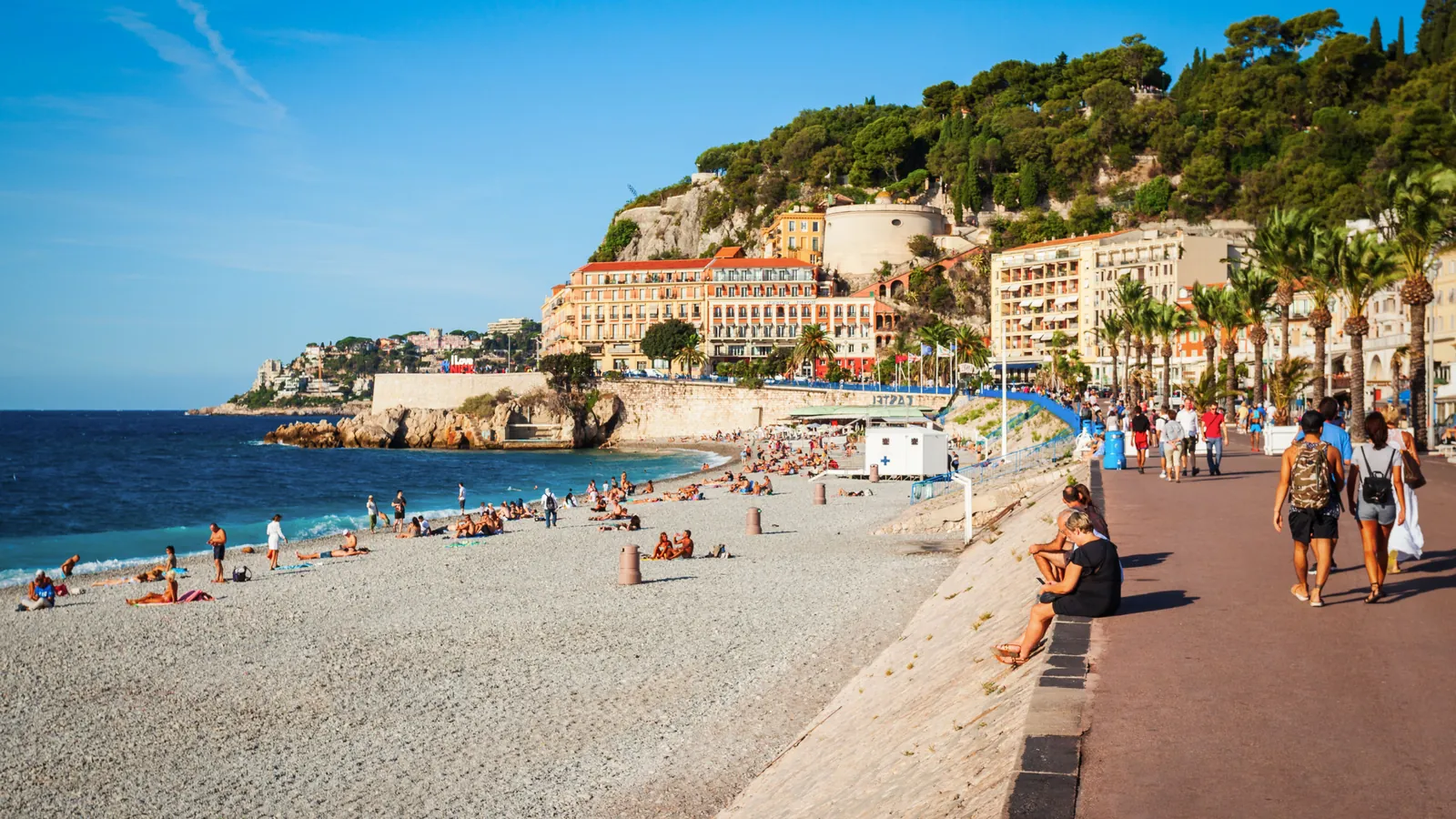
Nice suits buyers who want to live rather than visit: daily markets, culture and services within walking distance, and the simplest airport access on the coast. The trade-off is urban density, traffic and summer crowds in the most central streets. Our guide to buying property in Nice compares its neighborhoods, prices and rental rules.
Cannes
Cannes combines a famous seafront, the Croisette, with a busy calendar of international events. Central apartments within walking distance of the beach and the Rue d'Antibes are the core of the market, while the hills of La Californie and Super Cannes offer villas and residences with views across the bay.
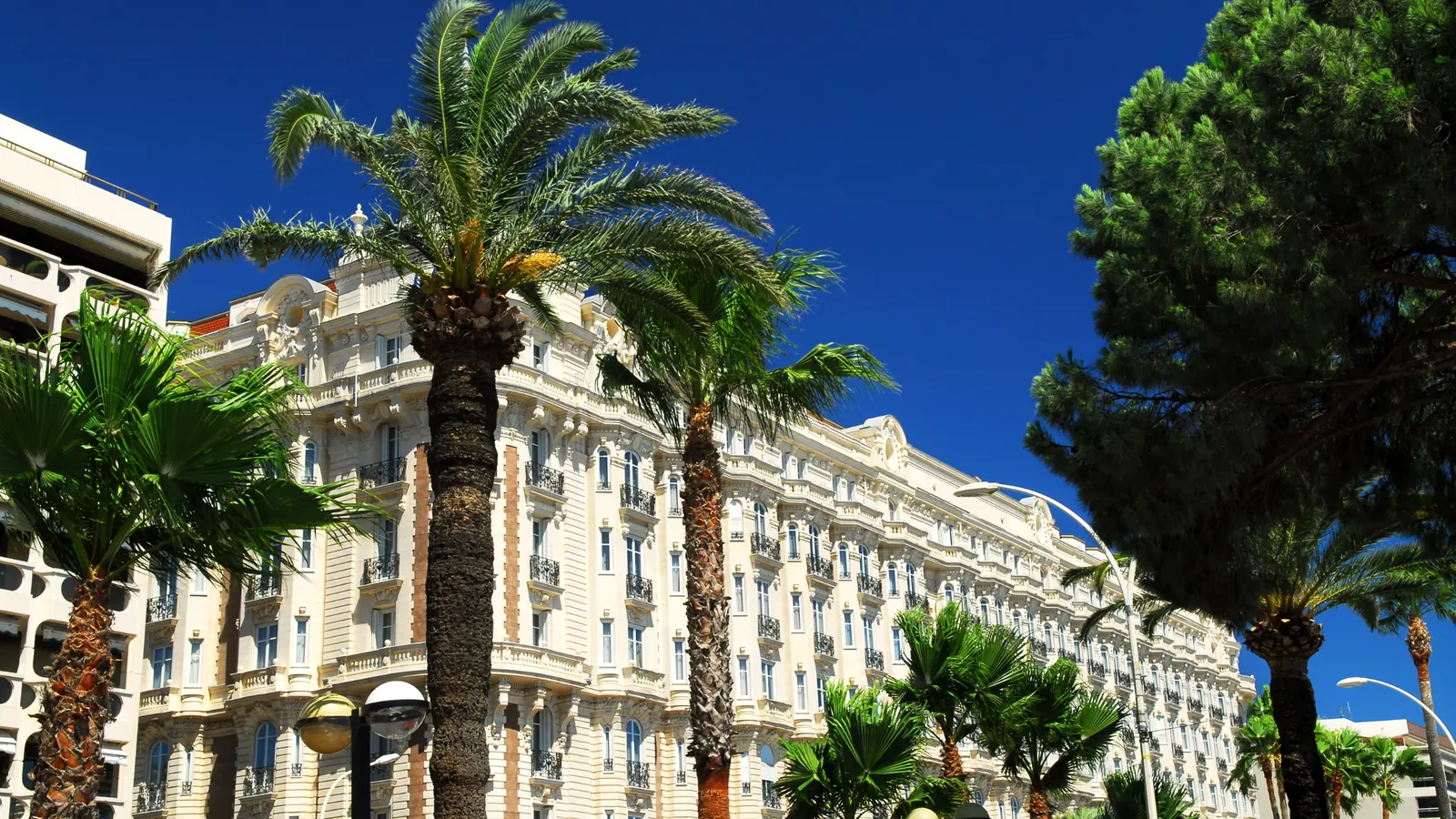
Cannes suits buyers who want polish, restaurants and an active social season, and who value the city's event-driven energy. Its rhythm is more seasonal than Nice's, and access from Nice airport is by road or train rather than tram. Our Cannes and Le Cannet buyer's guide compares its neighborhoods and prices.
Antibes and Juan-les-Pins
Antibes has a walled old town, a large marina, beaches on both sides and a lived-in feel that many buyers find more relaxed than Cannes. Juan-les-Pins, part of the same commune, is livelier and more beach-oriented in summer. Cap d'Antibes, the wooded peninsula between them, is one of the coast's most exclusive enclaves for estates and villas.
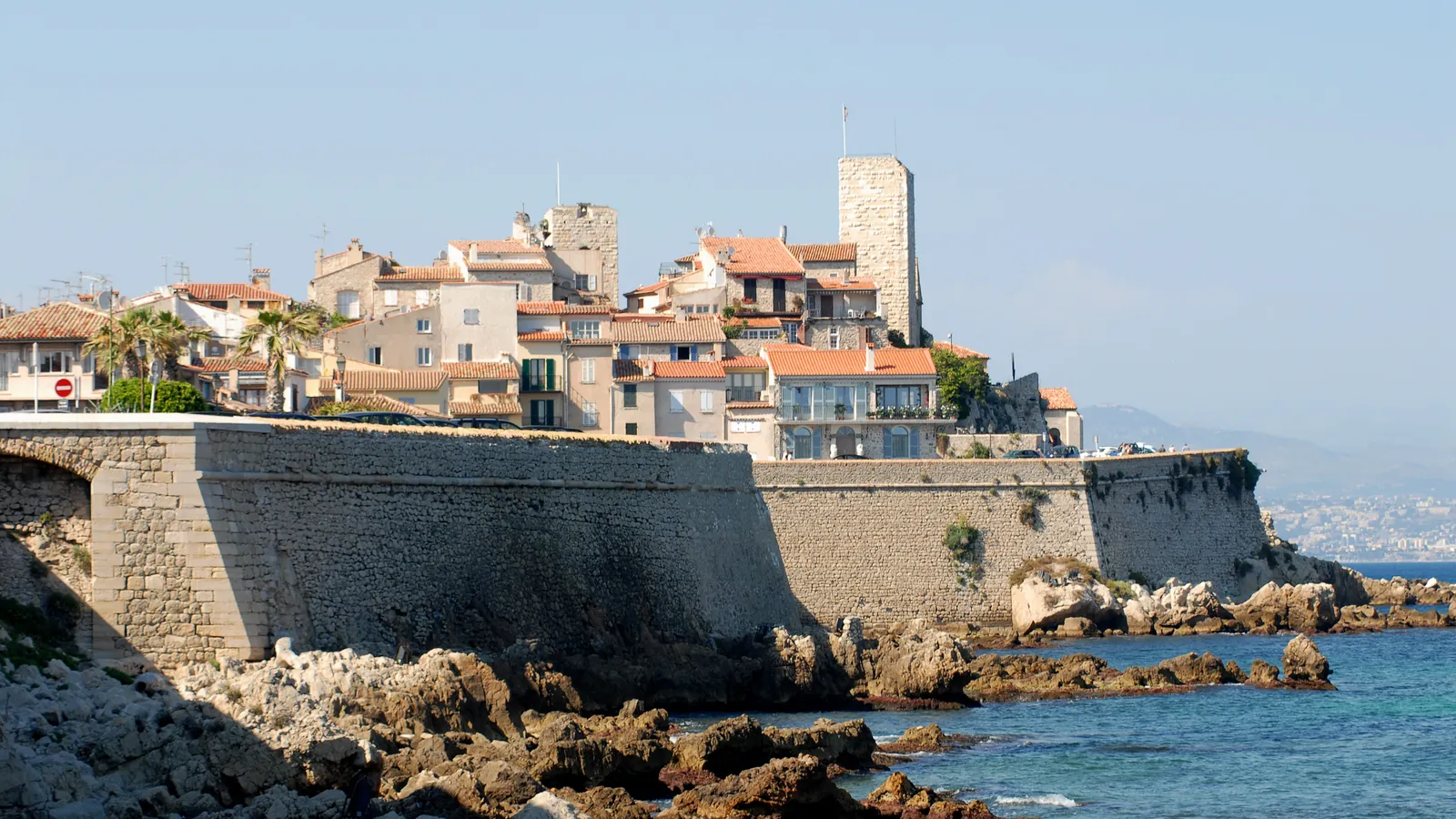
Antibes appeals to buyers who want a real town with year-round residents, good train links in both directions and a choice between apartments in town and houses on the cap or in the hills. Our Antibes and Juan-les-Pins buyer's guide compares its neighborhoods and prices.
Villefranche-sur-Mer
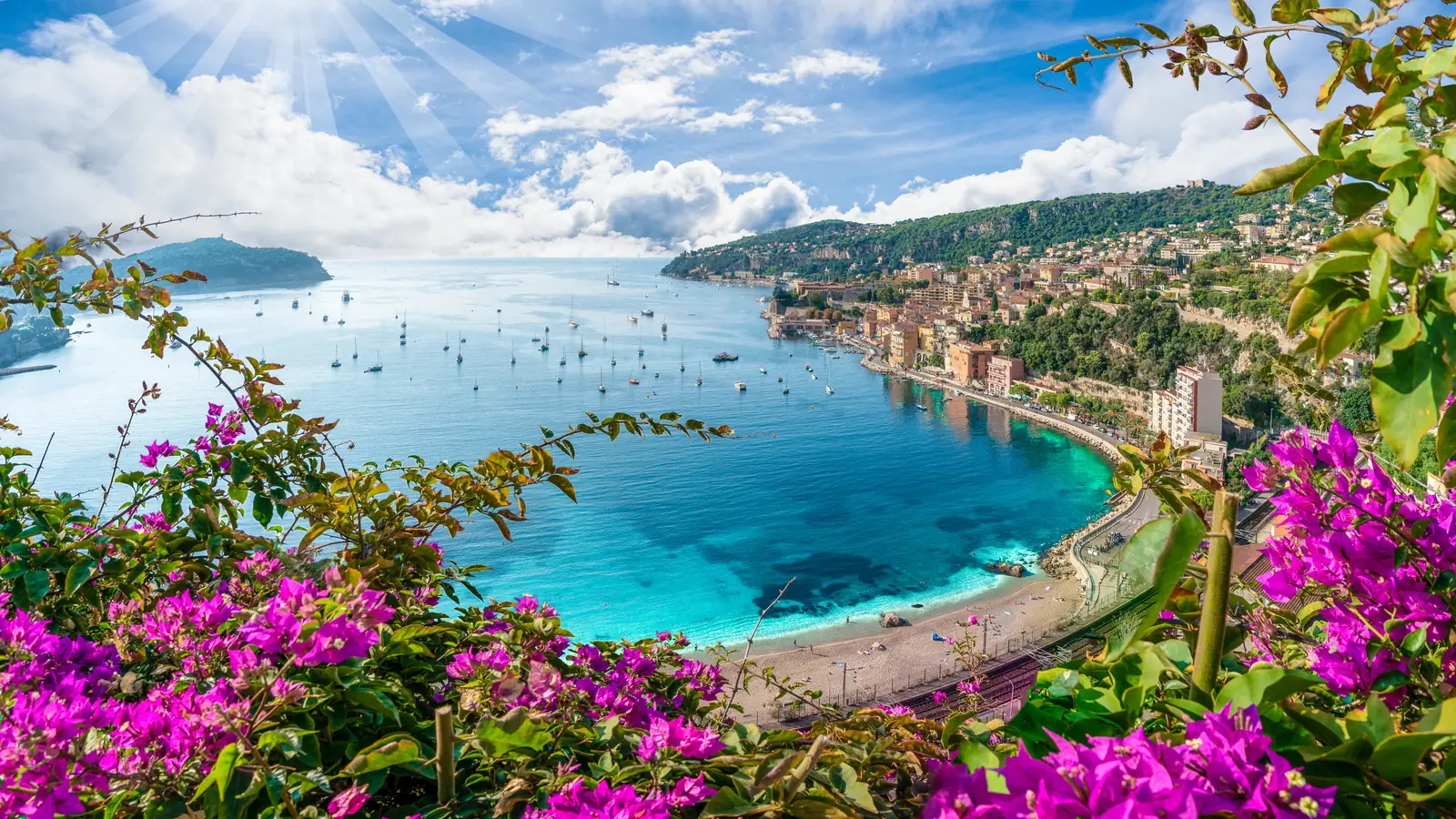
Villefranche sits on one of the deepest natural harbors on the Mediterranean, between Nice and Cap Ferrat. Its colorful old town tumbles down to the water, and the hillsides above hold apartments and villas with sweeping views of the bay.
It suits buyers who want a village atmosphere minutes from Nice. Steep streets, limited parking and cruise-ship days in season are part of the picture. Our guide to Villefranche and Cap Ferrat covers both in detail.
Saint-Jean-Cap-Ferrat
Cap Ferrat is a small, green peninsula of large private estates, discreet villas, coastal footpaths and a quiet harbor. Supply is limited and properties change hands rarely, which keeps the market highly specialized.
It suits buyers looking for privacy and space in a protected setting close to both Nice and Monaco. Day-to-day shopping and services are more limited than in the towns, and staff, maintenance and security matter more on large properties.
Théoule-sur-Mer
West of Cannes, Théoule sits at the foot of the Esterel massif, where red volcanic rock meets the sea. Villas built into the hillsides and along the coves offer some of the most dramatic views on the Riviera.
Théoule suits buyers who want nature, swimming coves and seclusion within reach of Cannes. Many homes are on steep plots, so access, parking and fire-risk management deserve close attention.
Mandelieu-la-Napoule
Mandelieu, next to Cannes, is known for its marina, golf courses, beaches and the castle at La Napoule. It offers a broad mix of apartments and houses, often with more space and easier access than the most central parts of Cannes.
It suits buyers who want an active, outdoor lifestyle and practical living close to Cannes, and families who want a little more room.
Saint-Raphaël and the Var coast
Saint-Raphaël, with its neighbor Fréjus, marks the western end of the classic Riviera and sits in the Var rather than the Alpes-Maritimes. It has a harbor, long beaches, a railway station on the coastal line and access to the Esterel coast at Agay and Le Trayas.
It suits buyers looking for a seaside town with a strong local life and a wider choice of houses. The trade-off is distance: Nice airport is farther away than from the eastern towns.
Comparing the main options
The table summarizes factual differences that matter to buyers. It deliberately does not quote average prices: values vary so much by street, view and building that a town-wide average would mislead more than it informs. The next section explains how to check real prices.
| Place | Département | Typical housing | Character | From Nice airport |
|---|---|---|---|---|
| Nice | Alpes-Maritimes | Mostly apartments; villas on the hills | Year-round city | Tram and road, the closest |
| Cannes | Alpes-Maritimes | Central apartments; villas in the hills | Seasonal, international events | Road or train |
| Antibes / Juan-les-Pins | Alpes-Maritimes | Apartments in town; villas and estates on the cap | Lived-in town, marina, beaches | Road or train, between Nice and Cannes |
| Villefranche-sur-Mer | Alpes-Maritimes | Apartments and hillside villas | Harbor village | Road or train, east of Nice |
| Saint-Jean-Cap-Ferrat | Alpes-Maritimes | Villas and estates | Private, quiet peninsula | Road, east of Nice |
| Théoule-sur-Mer | Alpes-Maritimes | Hillside and waterfront villas | Natural, secluded | Road, west of Cannes |
| Mandelieu-la-Napoule | Alpes-Maritimes | Apartments and houses | Marina, golf, family-friendly | Road or train, next to Cannes |
| Saint-Raphaël | Var | Apartments and houses | Seaside town, Esterel coast | Road or train, the farthest of these |
How to check real prices
France publishes recorded sale prices. The government's "Demande de valeurs foncières" service, known as DVF, lets anyone look up sales from the past five years by address or on a map, with the price, date, property type, number of rooms and floor area. It is updated twice a year, in April and October.
DVF is the best starting point for a realistic sense of value on a given street. It has limits: it does not show views, condition, floor level or renovation, which on the Riviera can matter as much as size. Use it to frame expectations, then compare with recent sales of genuinely similar homes. For price-per-square-meter estimates by town and real examples at different budgets, see our guide to what €1 million, €2 million and €5 million can buy on the French Riviera.
What ownership costs, beyond the price
Purchase costs and running costs differ more than many buyers expect.
Acquisition costs depend on the département
Transfer taxes on existing homes are set partly by each département. As of June 2026, the Alpes-Maritimes kept the standard rate, giving total transfer taxes of about 5.81% of the price. The Var, home to Saint-Raphaël, adopted the temporary higher rate allowed by France's 2025 finance law, for a total of about 6.32%, except for first-time buyers of a main residence. The notaire's regulated fee and other costs come on top. Our guide to buying property in France as an American explains the full process and costs.
Annual taxes on a second home
Owners pay the taxe foncière, and a second home is still subject to the taxe d'habitation, which was abolished only for main residences. Communes may add a surcharge of between 5% and 60% to the municipal share for second homes, so the amount varies noticeably from one commune to the next. Ask for the latest tax notices before you buy.
Building charges and maintenance
Apartments in co-owned buildings carry service charges and, sometimes, voted works such as facade restoration or elevator replacement. Villas bring garden, pool, roof and security costs, and someone to manage them in your absence. Our guide to the real cost of owning property in France explains each of these costs.
Renting the property
Short-term rental rules tightened under the national law of November 19, 2024. Furnished tourist rentals must be registered through a national system by May 20, 2026 at the latest, communes can reduce the number of nights a main residence may be let, and co-ownership rules can forbid tourist lets. If rental income matters to your plan, check the specific commune and building before you make an offer. Our guide to investing in French Riviera property explains the rental rules, taxes and how to calculate a realistic yield.
Seasonal life on the Riviera
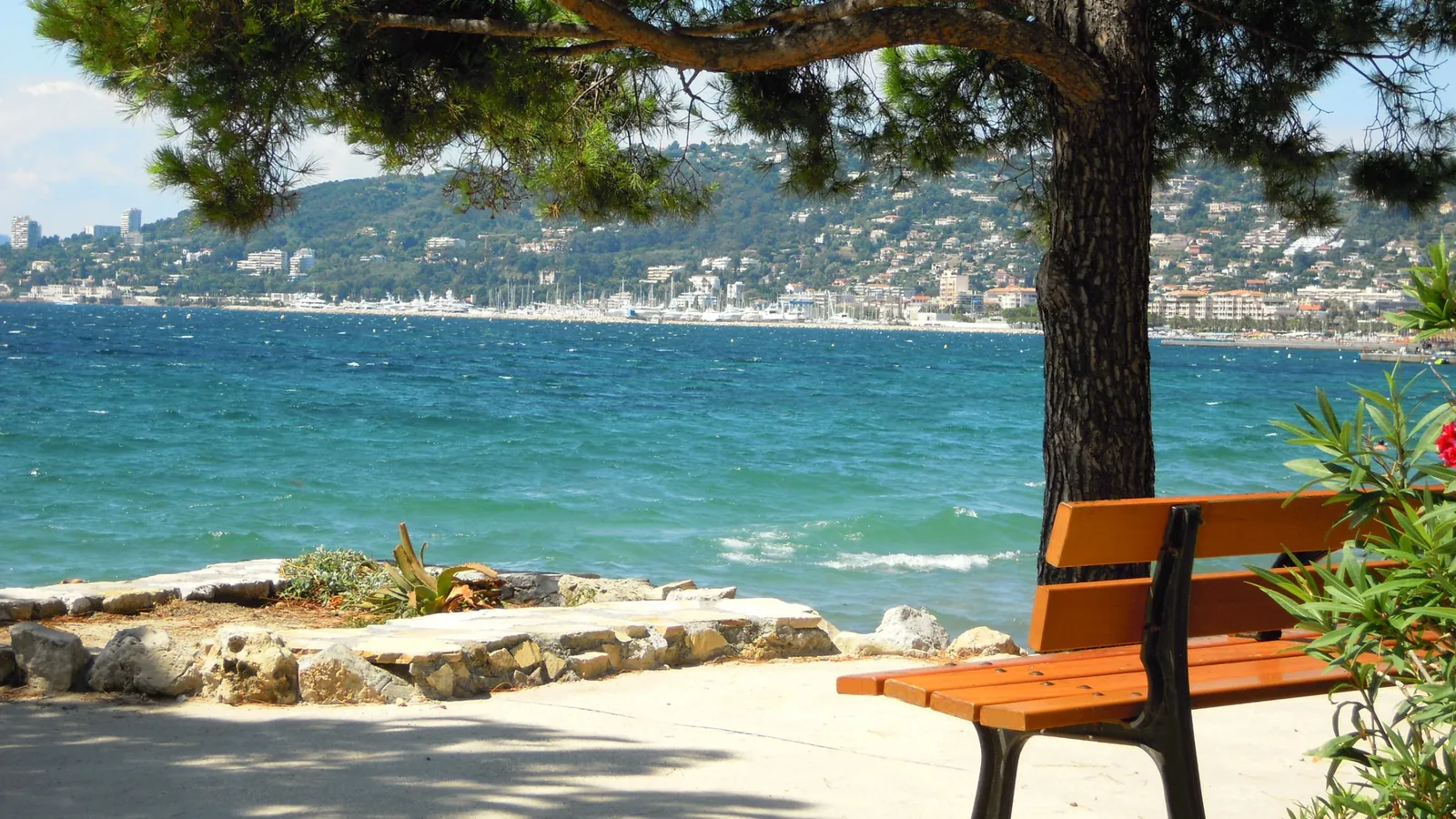
July and August bring crowds, traffic and higher prices in restaurants and rentals; spring and autumn are, for many owners, the best months. Winter is mild and quiet. Nice and Antibes stay active year-round, while some smaller villages become very calm. Visit a shortlisted area at least once outside the summer season before committing.
How to choose: a short checklist
Decide how many weeks a year you will use the home, and in which seasons
Choose between apartment and villa, and be honest about maintenance
Time the journey from the airport at the hours you would actually travel
Check DVF for recent sales on the streets you are considering
Ask for the building's charges, recent meeting minutes and planned works
Ask for the latest taxe foncière and taxe d'habitation notices
Confirm rental rules for the commune and the building if you may rent
Check the energy rating (DPE) and other mandatory reports
For hillside villas, check access, parking and wildfire-prevention obligations
Common mistakes
Choosing the view and ignoring the access. A spectacular hillside villa can be impractical without parking, or with a steep, narrow road.
Visiting only in August. Life, traffic and services look very different in November.
Assuming rental income. Local rules and building regulations can prevent short-term lets.
Treating Monaco as part of the Riviera market. The Principality is a separate country with its own rules; see our Monaco market report.
Frequently asked questions
Can Americans buy property on the French Riviera?
Yes. There is no general restriction on foreign buyers in France. Owning a home does not, however, give a right to live in France; residence is a separate question. Our guide to moving from the USA to France covers the visa side.
Which French Riviera town is best for living year-round?
Nice offers the most complete year-round city life, and Antibes offers a smaller town that stays active all year. Cannes and the villages are more seasonal.
Is Saint-Raphaël on the French Riviera?
Saint-Raphaël is on the Côte d'Azur coast but in the Var, not the Alpes-Maritimes. That matters for practical reasons, including transfer taxes and travel time to Nice airport.
How do I find out what homes actually sold for?
Use the French government's DVF service, which shows recorded sales from the past five years, then compare with recent sales of similar homes.
Final perspective
The Riviera rewards buyers who start with their own way of life rather than with a town's reputation. Nice for the city, Antibes for a lived-in town, Cannes for polish and events, Villefranche and Cap Ferrat for the eastern coast's calm, Théoule and Mandelieu for nature and space, Saint-Raphaël for a seaside town in the Var: each can be the right answer for a different buyer.
Explore our French Riviera page for current opportunities along the coast, read about buying in France, or contact Asher to talk through which areas fit your plans.
Sources
Côte d'Azur Airports, 2025 results (opens in a new tab).
French Ministry of the Economy, the DVF sale-price service (opens in a new tab).
Impots.gouv.fr, taxe d'habitation on second homes (opens in a new tab).
Transfer tax rates by département, as of June 2026: Toutsurmesfinances (opens in a new tab).
AGN Avocats, summary of the November 19, 2024 law on furnished tourist rentals (opens in a new tab).
This guide is general information as of October 2026, not legal or tax advice.
About the author
Asher McInerney
Asher McInerney has more than 20 years of real estate experience and has been licensed in California since 2005. He represents clients in San Francisco with Ground Matrix, Inc., and serves as International Director of Sales at Fracct Homes in France.
More about Asher